A Splendid Guide to Marrakech: Best Luxury Hotels & Riads
· By Splendid
In: Morocco · Travel Guides
Marrakech is the kind of city that announces itself before you’ve even left the airport. The heat, the light, the smell of cedarwood and orange blossom tangled with diesel and spice. Within the medina walls, centuries fold into one another. Riads hide behind unmarked doors. Rooftop terraces open to the Atlas Mountains. And every meal, every courtyard, every turn down a narrow alleyway feels like a scene you’ll replay in your mind for years. Here is how we’d spend our time.
A city that pulls you in through the senses and holds you there, somewhere between the call to prayer and the last sip of mint tea on a rooftop you never want to leave.
Riad Sakkan
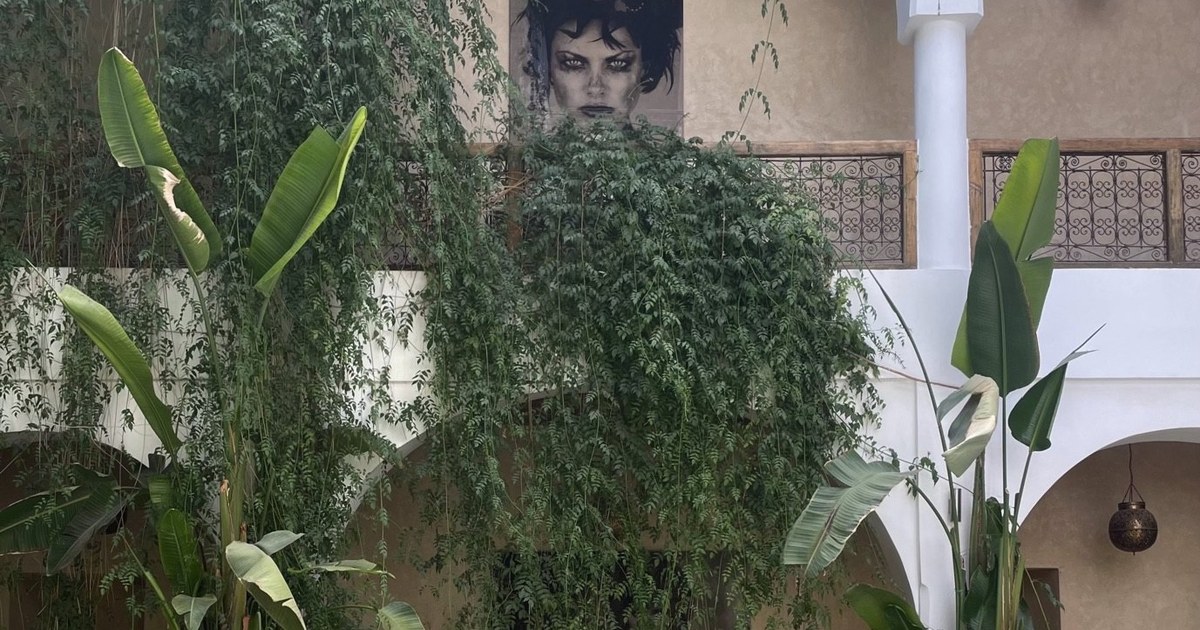
There is no sign on the door. Just a narrow alley off one of the medina’s busiest streets, a heavy wooden entrance, and then — silence. The courtyard opens before you like a secret: hand-chiselled plasterwork, a shallow pool catching the sky, bougainvillea tumbling from every balcony. Riad Sakkan sits in Mouassine, the medina’s most coveted quarter, and from the moment you step inside you understand why people return year after year.
We spent two weeks wandering through Marrakech’s riads, ducking behind unmarked doors, climbing tiled staircases into hidden courtyards. We lost count of how many we saw. And yet this one stopped us cold. Every angle, every surface, every play of light through the latticed screens felt considered in a way that never tipped into fussiness. The kind of riad that makes you put your phone down, then immediately pick it up again because you need a photograph of the place you just swore you’d simply experience. The most beautiful stay of the entire trip.
If you are looking for something intimate and deeply considered, Riad Sakkan is the answer. It has the feel of a private home run by people who genuinely care about every detail — from the handmade tiles to the way your morning coffee arrives without you ever having to ask. Small, personal, and quietly unforgettable.
The Details Riad Sakkan 43 Rue Sidi El Yamani, Mouassine, Marrakech Medina Style: Boutique riad, 12 rooms & suites From: €150/night Don’t miss: Rooftop bar at sunset, the hammam riadsakkan.com
Amanjena
The arrival alone is worth the trip. A private transfer pulls you from the dusty city outskirts, through monumental gates, and into a world that feels ancient and impossibly still. A hot towel, a glass of traditional Moroccan tea, and then the first glimpse of the grand courtyard through a rose-pink Moorish arch. At its centre, an expansive pond catches the last of the light, flickering torches reflected in the water as dusk falls. Storks roam the palm-lined corners. Songbirds fill the quiet. You feel, immediately and completely, that you have found something rare.
There are 34 pavilions and maisons here, and each one operates as its own private world. Personal pools, colonnaded terraces with fireplaces for the cooler evenings, interiors layered with Berber rugs and elegant Venetian-style domes. The green marble bathtubs deserve their own paragraph. At lunch, wood-fired pizzas are served overlooking the lush hills of the neighbouring golf course. Come evening, the mood shifts to candlelit Moroccan dinners with live music, or fresh sushi at Nama, where smoky tuna tataki and yellowtail usuzukuri arrive daily from Essaouira. The kind of place where two nights become four without anyone noticing.
Amanjena is not a hotel you visit. It is a world you enter and, for a few days, forget the one you left behind. Everything here is calibrated for stillness — the sound of water, the scent of roses, the way the light shifts through the colonnades in the late afternoon. It is grand without being intimidating, and quiet in a way that only the very best places manage.
The Details Amanjena Route de Ouarzazate, Km 12, Marrakech Style: Grand Moorish resort, 34 pavilions & maisons From: €800/night Don’t miss: Candlelit Moroccan dinner, sushi at Nama, the green marble bathtubs aman.com/resorts/amanjena
El Fenn
Vanessa Branson opened El Fenn in 2004, and it has been quietly expanding ever since, growing into one of the medina’s most vibrant retreats. The crowd skews art world and fashion, but the energy is relaxed and bohemian. Comfort over ostentation, always. Step inside and the colours hit you first. Riotous, layered, and somehow deeply calming all at once. Every room is its own universe of detail: a roll-top copper bathtub here, hand-stitched camel leather floors there, an open-air shower in one corner and a fireplace for cold desert nights in another.
The temptation to never leave is real. Three pools sit tucked between bougainvillea-filled courtyards. There is a spa, a yoga deck, and a collection of quiet reading corners that could swallow an entire afternoon. The on-site boutique stocks glassware and artisanal slippers from local craftsmen. At lunch, five fresh seasonal Moroccan salads arrive in quick succession. By evening, the kitchen turns out feather-light mushroom ravioli with fungi pulled from the Atlas Mountains, and perfectly grilled local fish fragrant with spice. Cocktails come from an elegant marble bar, and you carry them up to the rooftop, where you settle into colourful banquettes as the call to prayer drifts across the cityscape and the lanterns start to glow. Pure Moroccan enchantment.
El Fenn is the kind of place that gets under your skin. You arrive thinking you’ll stay two nights and leave four days later, sunburnt and slightly in love with the city. It is bohemian without being chaotic, luxurious without being stiff, and unapologetically itself. If Marrakech had a soul hotel, this would be it.
The Details El Fenn Marrakech Medina, Morocco Style: Boutique riad hotel, art-filled interiors Don’t miss: Rooftop cocktails at sunset, the seasonal Moroccan salads el-fenn.com
What to See
Must Do: Jardin Majorelle & Musée Yves Saint Laurent
Originally laid out by French painter Jacques Majorelle in the 1920s, the garden spans over 9,000 square metres of cobalt blue structures, exotic plantings, and that particular brand of silence that only seems to exist inside walled gardens in hot cities. Yves Saint Laurent and Pierre Bergé acquired the grounds in 1980, restoring every corner and preserving the place for the generations that followed. Today the adjacent museum houses rotating exhibitions of Saint Laurent’s work, from sketches to finished couture, all displayed in a building as considered as the collection inside. For anyone who cares about fashion, or beauty, or simply the way a garden can change the temperature of an afternoon, this is essential.
Jardin Majorelle → Musée Yves Saint Laurent →
Day Trip: Chefchaouen
Every surface washed in blue. Powder blue doorways, cerulean staircases, cobalt walls that deepen and shift with the light. Chefchaouen feels like stepping into a painting that someone forgot to finish, leaving you free to wander through its half-told story. The streets are labyrinthine and easy to get lost in, which is rather the point. Bring Google Maps or, better still, a local guide who knows which corners open to the best views and which alleys lead somewhere worth finding. Give it a full day. You will want every hour of it.
The Medina of Marrakech
A UNESCO World Heritage Site and the beating heart of the city. The medina is not a single attraction but an entire world — a maze of souks selling everything from hand-hammered lanterns to pyramids of saffron and cumin, tanneries where leather is still dyed in centuries-old stone vats, and tiny workshops where artisans carve cedarwood by hand. Get lost on purpose. Turn into the alleys that look like they lead nowhere. Stop for fresh orange juice at a cart that has no name. The medina rewards the unhurried and the curious in equal measure.
Day Trip: Agafay Desert
Forty minutes from the medina and a world away from everything. The Agafay is not the Sahara — it is a rocky, lunar desert that rolls toward the Atlas Mountains in silence. Several luxury camps have set up here, offering starlit dinners, camel rides at dusk, and the kind of stillness that makes you realise how loud your life has become. Go for a night, or simply drive out for sunset. Either way, it will recalibrate something.
Where to Dine
Moroccan cooking is generous in every sense. Rich, nourishing, built on centuries of technique, and remarkably kind to vegetarians. The dishes here are among the most flavourful we have encountered anywhere, and many of the best plates at these restaurants are entirely plant-based. Here are our tried and tested favourites.
Le Jardin Hidden deep inside the medina, Le Jardin serves breakfast through to dinner with a menu that balances traditional Moroccan flavours with a modern lightness. The courtyard setting is lush and cool, the kind of place you find by accident and return to deliberately. Le Jardin →
Les Jardins Du Lotus Open daily from lunch through late evening, the kitchen moves between Mediterranean and international plates with confidence. The atmosphere turns up as the sun goes down, with music and a resident DJ setting the tone for long, lingering nights. Les Jardins Du Lotus →
The Restaurant at Amanjena The courtyard restaurant opens in the evenings and celebrates the full breadth of Moroccan cuisine, weaving together Berber, Andalusian and Mediterranean influences under the stars. As beautiful as the food is good. The Restaurant at Amanjena →
Villa Des Orangers Shaded by orange trees and set beside the pool, this restaurant serves lunch and dinner with the quiet confidence of a place that knows exactly what it is. Fine dining in a true oasis, tucked just outside the medina walls. Villa Des Orangers →
Sabo A rooftop restaurant in the heart of the medina that feels like a secret the city is slowly letting out. The menu is modern Moroccan with European inflections — think chargrilled lamb with harissa and pomegranate, or sea bass with chermoula and preserved lemon. The setting does most of the work: lantern-lit tables, a canopy of stars, and views across the rooftops that make every course feel like an occasion. Book for dinner and stay late. Sabo →
Bacha Coffee Housed in the beautifully restored Dar el Bacha palace, Bacha Coffee is as much an experience as it is a café. The interiors are exquisite — hand-painted zellij tilework, carved stucco ceilings, and arched doorways that frame every corner like a photograph. The coffee menu spans over 200 single-origin beans from around the world. Pair a pour-over with one of their flaky pastries and settle into a courtyard seat. It is the most elegant cup of coffee you will drink in Morocco, and quite possibly anywhere. Bacha Coffee →
Marrakech taught me colour. Before Marrakech, everything was black.
Marrakech is not a city you understand on the first visit, or even the third. It reveals itself in layers — a courtyard you missed the day before, a rooftop you weren’t looking for, a flavour you can’t quite name but will crave for months afterwards. It is overwhelming and gentle, ancient and completely alive. Go with time to spare. Let the medina lead. And when the light turns gold over the Atlas Mountains and the call to prayer drifts across the rooftops, you’ll know exactly why we keep coming back.
Frequently Asked Questions
What is the best area to stay in Marrakech?
The Medina (especially around the Royal Mansour and La Mamounia) offers traditional riad experiences within the historic walls, while Hivernage and the Palmeraie suit travellers seeking modern resort-style hotels with space and gardens. For design lovers, the Medina's smaller boutique riads deliver the most atmospheric stays.
When is the best time to visit Marrakech?
March to May and September to November offer the most pleasant weather — warm days, cool evenings, and minimal rain. Summer (June–August) is extremely hot, often exceeding 40°C, and winter nights can be surprisingly cold.
What are the best luxury hotels in Marrakech?
Royal Mansour, La Mamounia, Amanjena, and El Fenn rank among the city's most celebrated hotels. Royal Mansour offers private riads with pools; La Mamounia is the grande dame with legendary gardens; Amanjena sits in the Palmeraie; El Fenn is the design-forward boutique favourite inside the Medina.
Is Marrakech safe for travellers?
Marrakech is generally safe for tourists, though the Medina's souks can feel intense on a first visit. Stick to well-known riads, arrange airport transfers through your hotel, and negotiate taxi fares in advance. Solo female travellers are common but modest dress is advised.