Best Design Hotels in the World: 8 Cinematic Stays
· By April Windsor
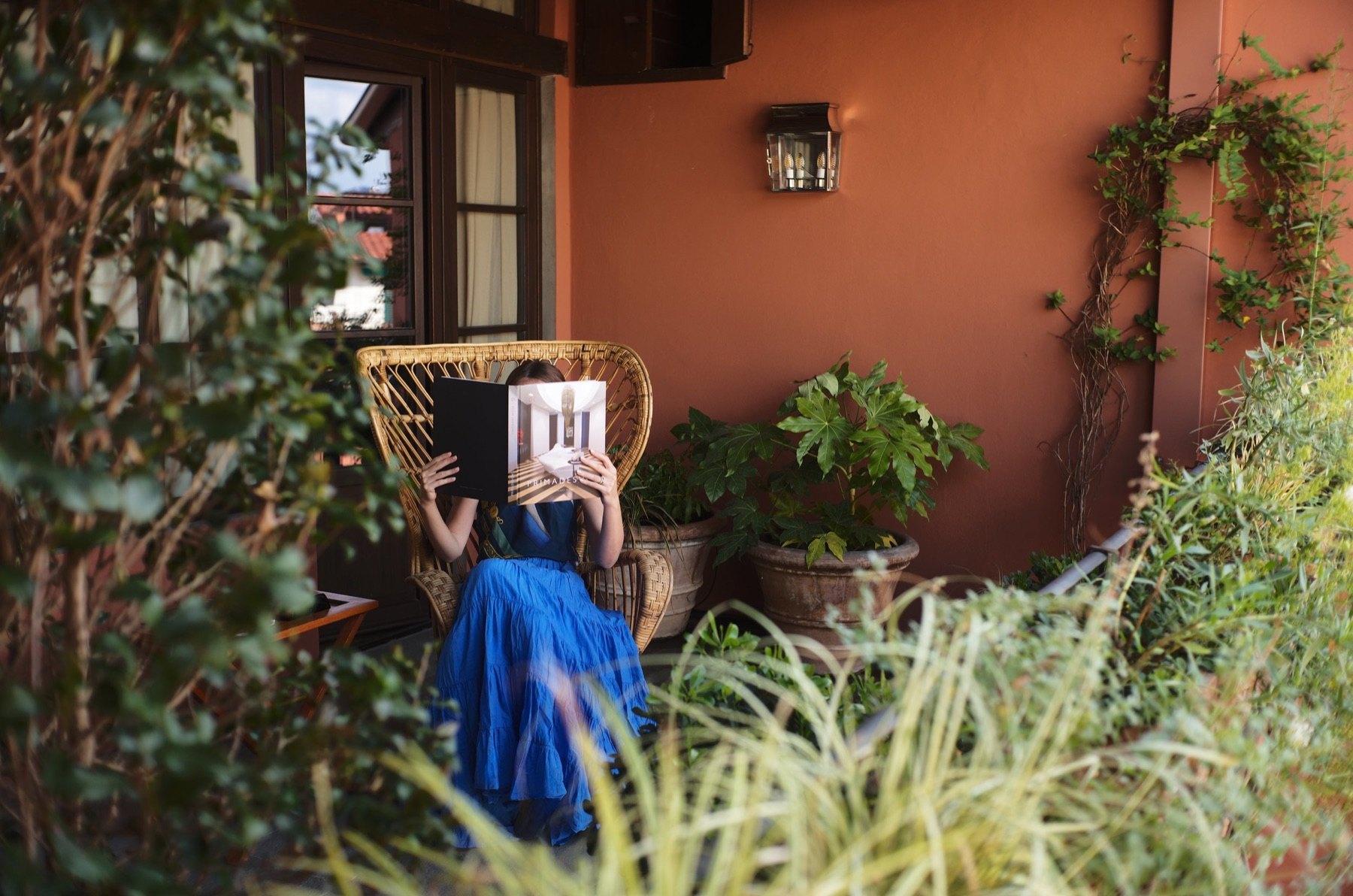
There are hotels you sleep in, and then there are hotels that stay with you. Places where the light falls a certain way, where the architecture holds a mood, where you catch yourself pausing mid-step because the scene before you feels impossibly, beautifully composed. These are eight of them.
THE JAMES SUITE HOTEL FIRENZE 1564, Florence
Hidden away on Via di Mezzo in Florence’s Sant’Ambrogio quarter, The James occupies a 16th-century residence where time has not so much stopped as chosen to linger. Frescoed ceilings murmur centuries of conversation. The suites are design-led but never cold. A red canopy bed here, a butterfly print against inky blue walls there, terraces that open to the Florentine sky like private balconies in a Zeffirelli film. Downstairs, the softly lit restaurant serves seasonal Florentine plates, and the bar is the kind of place where a negroni turns into three, the evening unfolding over candlelight and quiet laughter. The newest jewel in Manfredi Fine Hotels’ crown, it is Florence distilled: intimate, layered, impossibly beautiful.
MAISON MYSTIQUE, Thailand
Born from a dream and shaped by the imagination of founder Fearn Kate, Maison Mystique is a place where hospitality becomes theatre. Twenty-two suites, each one its own world. Botanically inspired, celestially calm, or somewhere in between, connected by lantern-lit passageways that make the simple act of walking to dinner feel like a scene from a Wong Kar-wai film. The garden unfolds in chapters: Mahogany Lane, Le Jardin Bijoux, woodland paths, a kitchen garden fragrant with lemongrass. At Bar Mystère, the cocktails are botanical, the lighting is moody, and the evening stretches on in that way it only does when you’ve nowhere else to be. Every corridor, every garden path, every candlelit corner – the story.
THE VENICE VENICE HOTEL, Venice
When Alessandro Gallo and Francesca Rinaldo took the keys to Palazzo Ca’ da Mosto, one of the oldest palaces on the Grand Canal, its roots reaching back to the 13th century. They did not simply restore it. They reimagined it. The Venice Venice Hotel is a layered thing, where centuries of Venetian history hum beneath contemporary design, where Murano glass catches afternoon light that has been doing this exact thing for eight hundred years. Breakfast is taken on the terrace above the Grand Canal. Gondolas drift past. The aperitivo hour stretches golden and unhurried. It is, in the best possible sense, an invitation to inhabit Venice’s past, present and future all at once. La Serenissima as it was always meant to be experienced.
CAPELLA UBUD, Bali
Bill Bensley conjures worlds, and Capella Ubud may be his most fantastical act. Inspired by the European settlers who arrived in Bali in the 1800s, this is a tented camp in the way that a Wes Anderson set is a hotel room: whimsical, maximalist, and astonishingly detailed. Twenty-two tents lie hidden in thick rainforest canopy near the village of Keliki, connected by suspension bridges, each with its own saltwater pool and copper bathtub. Not a single tree was cut during construction. Wooden trunks hide minibars. Canopied four-poster beds face the jungle. At Api Jiwa, dinner is fire-cooked and elemental. By night, the only sounds are the river and the forest, and you understand, quite suddenly, why people call Bali sacred.
THE LEGIAN SEMINYAK, Bali
The late Jaya Ibrahim shaped some of the most quietly beautiful spaces in Asia, and The Legian may be his masterpiece of quiet elegance. There is a hush to this place. Not silence, but considered calm. Tropical modernism softened by old-world grace: teak-framed doors, symmetry so subtle it feels like a whisper, textures that are chosen, not styled. Three tiered infinity pools spill toward the Indian Ocean. Suites face the sunset. For over three decades, The Legian has defined what coastal luxury looks like in Bali, and it has done so not by shouting but by standing very still and letting the ocean, the light, and the architecture speak. If there is a film this recalls, it is the kind where the camera lingers on a single beautiful frame and that is enough.
THE MERU SANUR, Bali
Walking through The Meru Sanur feels akin to exploring a living museum, a comparison less with boutique hotels than with the Louvre Abu Dhabi. Conceived by Indonesian architects Gregorius Yolodi Supie and Maria Rosantina, the resort spreads across 15 hectares of Sanur’s original shoreline, its four buildings interconnected by bridges that dissolve the boundary between architecture and garden. The design layers clean modern lines with ironwood and merbau, grounding the avant-garde in Balinese craft. It is contemporary sanctuary as cinema. Every corridor a tracking shot, every courtyard a perfectly framed still. Where most beach resorts flatten experience into leisure, The Meru gives it depth, texture, and a quiet, architectural drama.
THE BRISTOL BELGRADE, Serbia
Built between 1910 and 1912, The Bristol has watched Belgrade transform through wars, revolutions and reinventions, and has now undergone its own. Reopened in 2025 after extensive restoration, the hotel reclaims its place as one of the city’s most monumental buildings, its 143 rooms dressed in French Art Nouveau with Eastern European motifs, its atrium flooded with the kind of light that makes you stop and look up. The Rockefellers stayed here. Tito knew its corridors. Garry Kasparov studied its rooms. Awarded a Michelin Key in its first year, The Bristol is Belgrade’s answer to the grand European hotels of Vienna and Budapest. The same glamour, the same weight of history, but with a rawness and energy that is entirely its own. A city finding its next act, and a hotel that has always known how to set the stage.
MIRAMALFI, Amalfi Coast
Perched above the curve of the Mediterranean where the cliffs fall away into endless blue, Miramalfi is a place where design disappears into landscape. Whitewashed arches frame the Tyrrhenian Sea. Checkerboard floors cool underfoot. Linen drapes ripple like sails in the breeze, and hand-crafted sculptures by local artist Paolo Sandulli bring a soft, human warmth to every corner. Nothing here is styled. Everything is felt. The rooms are pared back to essentials: light, stone, air, view. At Azur Lounge, dinner unfolds on a sea-view terrace as the sky turns copper, and at Mario’s Bar, tucked just off the lobby, the coffee is exceptional and the Amalfi lemons find their way into everything. Miramalfi doesn’t chase trends. It leans into its coastline, its heritage, its quiet. In a world of visual noise, it offers something truly rare: the power of considered design, bathed in coastal sunlight and timeless spirit.
PALAZZO ROMA, Rome
On Via del Corso, behind a façade that has watched centuries of Roman life unfold, Palazzo Roma opens like a private museum you happen to be allowed to sleep in. Original frescoes arch overhead. Coffered ceilings and Versailles-style parquet trace the footsteps of 19th-century aristocracy. The 39 rooms are each individually designed, contemporary luxury woven through Roman history, where a marble staircase wide enough for crinolines leads you past rare marbles and inlaid wood panels. At Core Restaurant, dinner unfolds beneath frescoed ceilings, and at the Palazzo Bar, the mood shifts to something quieter, more secret. The Trevi Fountain is a three-minute walk away, but you may not want to leave. Some sets are too good to abandon mid-scene.
Eight hotels, eight worlds. Each one a place where design is not decoration but atmosphere, where architecture holds a mood the way a great film holds a frame. The best cinematic stays are not about spectacle. They are about the feeling that lingers long after you have left, the quiet certainty that you have, for a moment, stepped inside something extraordinary.
PhotographyAll photography by Splendid Magazine, captured on the Leica M Series and Apple iPhone 17 Pro.
Frequently Asked Questions
What makes a hotel "cinematic"?
Cinematic hotels are distinguished by their sense of composition — architecture, light, materials, and atmosphere that feel art-directed. Often this means strong design lineage (a named architect or designer), location-specific craft, and spaces that photograph beautifully at every hour of the day.
What are the most design-forward hotels in the world?
The James Suite in Florence, Miramalfi on the Amalfi Coast, Capella Bangkok, Amanyangyun in Shanghai, Palácio Tangará in São Paulo, and Six Senses Ibiza are among the most consistently celebrated design hotels globally.
Splendid's book of cinematic hotels, Hotel Diaries, is available in print and digital editions.