Shanghai Travel Guide: Hotels on the Bund & Jing'an
· By April Windsor
In: China · Travel Guides
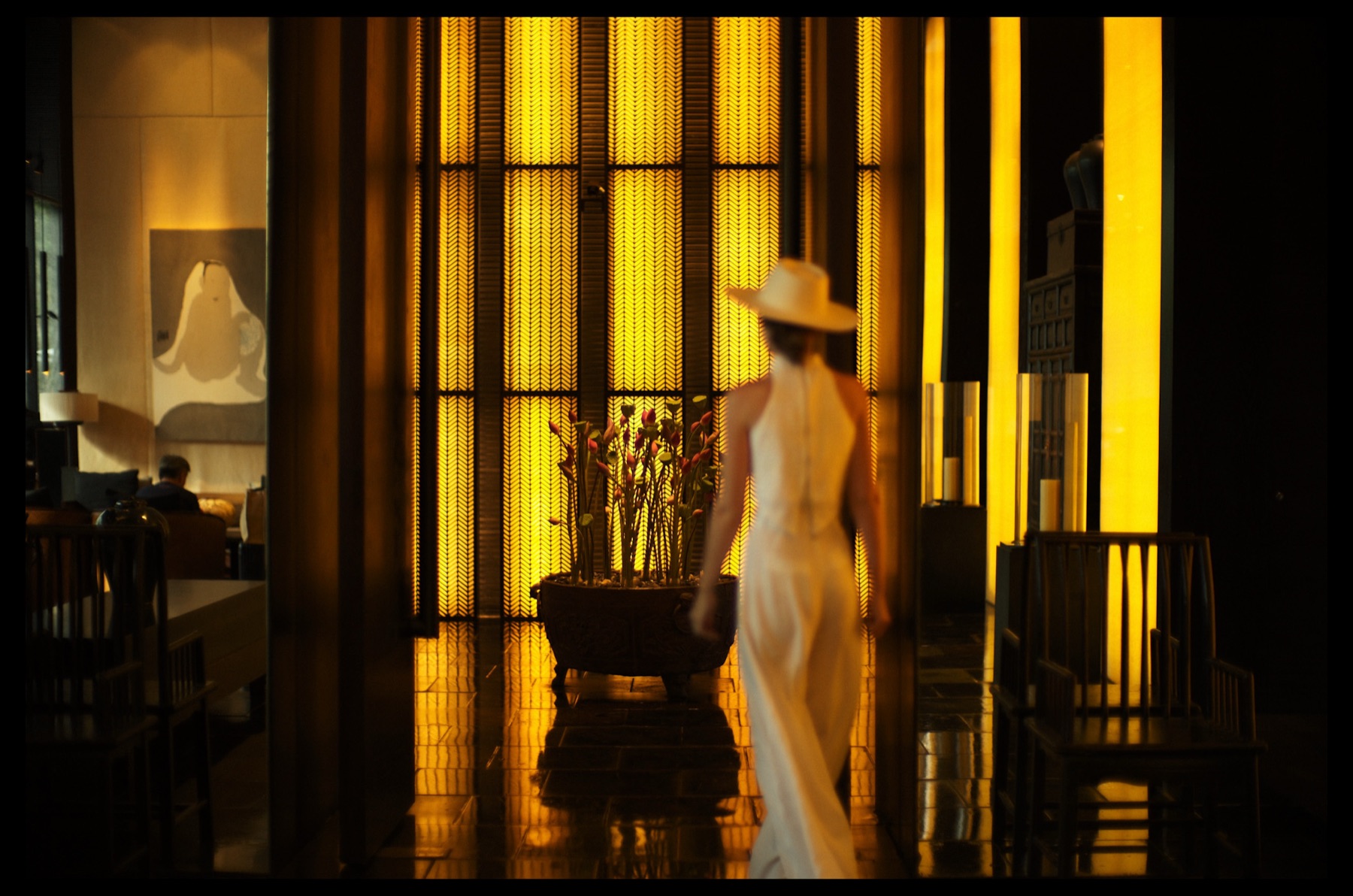
There are cities that impress, and cities that linger. Shanghai is the second kind. A place where the Bund turns golden at dusk and the skyline across the river sharpens into something almost unreal. Where temple incense drifts through courtyards that have not changed in centuries, and rooftop bars float above a city that reinvents itself every five years. These are two hotels that understood the assignment.
THE PULI, JING’AN
The PuLi calls itself an urban resort, and in Jing’an, a step from the park and the old temple, it earns the phrase. It opened in 2009 as the first hotel from Urban Resort Concepts, and its whole argument is quiet: the name is taken from uncarved jade, and the house philosophy holds that richness arises from it.
Kume Sekkei’s architecture frames 193 rooms in dark timber, cast bronze and grey Shanghai brick, and the wellness floor hides a 25-metre pool behind a wall of glass that looks straight into the crowns of old trees. Downstairs, the Long Bar has been a fixture of Shanghai evenings since the doors opened. Phénix, the French dining room upstairs, held a Michelin star for nine consecutive years, and its French onion soup is one of my favourite dishes anywhere. UR SPA, the first of its name in China, takes a contemporary approach that lands as pure calm; book the afternoon, not the hour. A Leading Hotel of the World, and a quiet one. Breakfast is its own slow pleasure, and the whole place holds a calm so particular I have not found it anywhere else in the city. I cannot wait to return. thepuli.com
ALILA SHANGHAI, JING’AN
The newest name on this list, and the one for design. Alila opened in September 2024 as the brand’s first urban resort in Greater China, reimagined by the Shenzhen architect Ju Bin from the bones of the former Four Seasons Puxi.
Its 186 rooms, ninety-four of them suites, wear a palette of forest, moss and stone, and the building’s real luck is its outlook: it overlooks Zhangyuan, the restored lanes of shikumen stone-gate houses, with private access most hotels would envy. Eat at 500 Weihai Road, the plant-forward Chinese room; drink at Secret Roof, a crimson-lit bar above the old rooftops; swim on the fifth floor, where a twenty-metre pool sits beside the spa. The lighting alone is worth studying, every corridor and corner lit like a gallery hang, shadow used as carefully as light. And the turndown is its own small ceremony: sleep spray, heated eye masks, the little things that make the night feel considered. alilahotels.com
THE SHANGHAI EDITION
Ian Schrager built The Shanghai Edition inside two buildings, one heritage, one contemporary, and filled the space between them with dark woods, brushed metals, and sculptural lighting that makes strangers look interesting. The lobby is cavernous and hushed, cedarwood on the air, conversations drifting upward beneath ceilings that seem to have no end. Rooms are moody and minimal: tactile finishes, soft tones, floor-to-ceiling glass framing the Huangpu like a painting you keep returning to. At Shanghai Tavern, dinner is bold and convivial, and breakfast is one of the best hotel mornings in the city, worth waking early for.
The best seat in the house is ROOF, twenty-nine floors up, an open terrace wrapped in a wooden trellis and climbing ivy with the whole Pudong skyline standing in front of you like a stage set. Come at golden hour and keep the table; Punch Room waits one floor below when the wind picks up. The evening stretches on in that way it only does when you have nowhere else to be.
editionhotels.com
THE PENINSULA SHANGHAI, THE BUND
The last great building raised on the Bund, and the only new one on that stretch of history in more than sixty years. The Peninsula opened in 2009 on the site of the old British Consulate garden, its granite and bronze facade a modern reading of the Bund’s Art Deco age, drawn by David Beer with interiors by Pierre-Yves Rochon.
There are 235 rooms and suites, a Cantonese dining room in Yi Long Court that holds a Michelin star, and Sir Elly’s high above with the whole Pudong skyline laid out behind the glass. The green Rolls-Royces at the door, one of them a restored 1934 Phantom, are less a flourish than a statement of intent. And the thing I will not stop telling people about: the Peninsula’s own yacht, which slips out onto the Huangpu with the Bund unrolling on one side and Pudong rising on the other. There is no more special way to see this city. peninsula.com
FAIRMONT PEACE HOTEL, THE BUND
No building tells the Bund’s story better. Sir Victor Sassoon raised it in 1929 as Sassoon House, home to the Cathay Hotel, and its green pyramid roof has been Shanghai shorthand ever since. A three-year restoration returned it to the waterfront in 2010 as the Fairmont Peace Hotel, 270 rooms with the Art Deco kept intact.
The Nine Nations Suites survive from the original, each dressed in the style of a different country, and the Sassoon Suite crowns the tenth floor where the man himself once lived. Downstairs the Jazz Bar still runs nightly, home to the oldest jazz band in the world. Chaplin stayed here; Noël Coward finished a play. The spa keeps the same unhurried register, and the staff are the warmest in Shanghai; no one greets a returning guest like the Peace Hotel does. You are booking a piece of Shanghai’s history. fairmont.com
THE RITZ-CARLTON SHANGHAI, PUDONG
High above Pudong, in the uppermost reaches of the Shanghai IFC, The Ritz-Carlton occupies the kind of altitude that turns a city into an abstraction. Lights. Geometry. The slow drift of barges on the Huangpu far below. Polished marble underfoot, tailored finishes, a grandeur that feels earned rather than performed. The suites are generous and immaculate, dressed in warm neutrals and rich textures, bathrooms clad in Italian marble, views that make you forget what floor you are on.
Evenings belong to Flair, the rooftop bar where the Oriental Pearl Tower glows just beyond the glass and cocktails arrive with quiet ceremony. Below, the infinity pool stretches toward the skyline like a still from a film you have not yet seen. In a city moving as fast as Shanghai, The Ritz-Carlton has chosen stillness, and that is its quiet power.
ritzcarlton.com
ANDAZ SHANGHAI ITC, XUJIAHUI
The newest opening in this guide, and proof that Puxi’s centre of gravity keeps moving. Andaz opened its second Shanghai address in February 2026 inside the ITC development at Xujiahui, where Three ITC rises 370 metres, the tallest tower in Puxi, directly above the metro interchange. The entrance sits on the third floor; check-in happens at blue leather tables on the fourteenth, no reception desk in sight.
HBA designed the 267 rooms as a vertical Shanghai neighbourhood, corridors drawn like the city’s laneways with plane-tree silhouettes and doorways that change as you pass. East Wing cooks nostalgic Shanghainese under chef Jesse Chen, braised pork belly and bao done properly, West Wing runs a European deli and wine bar, and the Rooftop Bar pours tea-infused cocktails over the skyline. The pool below was modelled on the Huangpu’s old rowing clubs. hyatt.com
GETTING AROUND
Shanghai rewards a driver. China Chauffeurs is our preferred way in from the airport and around the city: English-speaking drivers, pickups at both Pudong and Hongqiao, and cars by the hour once you land. We tried the MAEXTRO S800, the new Huawei-powered flagship sedan, and the experience alone is worth the booking. chinachauffeurs.com
PLACES TO WANDER
The Bund | Light show from 6 to 10pm History and modernity face each other across the water, and at dusk the whole thing lights up like a film set. Go at golden hour. Stay for the glow.
Shanghai French Concession Plane trees, art deco villas, quiet cafés that feel like they belong in another decade. The best local designers are here, tucked behind doors you almost walk past.
Yu Garden & Yu Garden Bazaar Ornamental bridges, carved stone, tea houses balanced above the water. Old Shanghai, still breathing.
Jing’an Temple or Jade Buddha Temple Incense smoke and silence in a city that rarely offers either. Worth the pause.
1000 Trees A thousand columns wrapped in greenery, rising from the riverbank like something between a mountain and a building. Heatherwick Studio at full volume.
Shanghai does not hand itself to you. You have to walk it, taste it, let the hours unspool. The Bund at golden hour. A temple courtyard in the rain. The neon haze of Nanjing Road at midnight, when the city feels like it belongs to no century in particular. These are the scenes that stay with you, long after the skyline has faded from view.
The Details Shanghai China Stay: The PuLi, Jing’an. Alila Shanghai, Jing’an. The Shanghai Edition. The Peninsula, the Bund. Fairmont Peace Hotel, the Bund. The Ritz-Carlton, Pudong. Andaz Shanghai ITC, Xujiahui Dine: Hakkasan | 1 Michelin star, Din Tai Fung | Casual dining, Yona | The Shanghai EDITION Experience: The Bund at dusk, Pudong skyline, temples, museums, Nanjing Road Good to know: Colonial heritage meets futuristic ambition, a city of contrasts at every turn
Frequently Asked Questions
What is the best luxury hotel in Shanghai?
The seven stays in this guide, The PuLi, Alila Shanghai, The Shanghai Edition, The Peninsula on the Bund, the Fairmont Peace Hotel, The Ritz-Carlton Pudong and the new Andaz Shanghai ITC, rank among the city's best. Beyond them, Amanyangyun and Capella Jian Ye Li are the names most often set beside them.
Which area is best to stay in Shanghai?
The Bund offers iconic Pudong skyline views and classic Shanghai grandeur. The former French Concession is leafy, residential and filled with independent boutiques and cafés, the best area for design-led travellers. Jing'an and Xintiandi put you in walking distance of cultural and dining districts.
What are the best restaurants in Shanghai?
Ultraviolet by Paul Pairet, Fu He Hui (vegetarian tasting), Da Vittorio (Italian), Mr & Mrs Bund, 8½ Otto e Mezzo Bombana, and Cathay Room at Fairmont Peace Hotel headline Shanghai's fine dining. For local classics, try the xiaolongbao at Jia Jia Tang Bao and the Beijing duck at DaDong.
How many days do you need in Shanghai?
Four to five days is ideal for a first visit, with time for the Bund and Pudong skyline, the French Concession, Yu Garden, shopping, the Power Station of Art and West Bund museums, and a day trip to the water town of Zhujiajiao or Suzhou.