Eight Films to Inspire Your Next Trip
· By Splendid
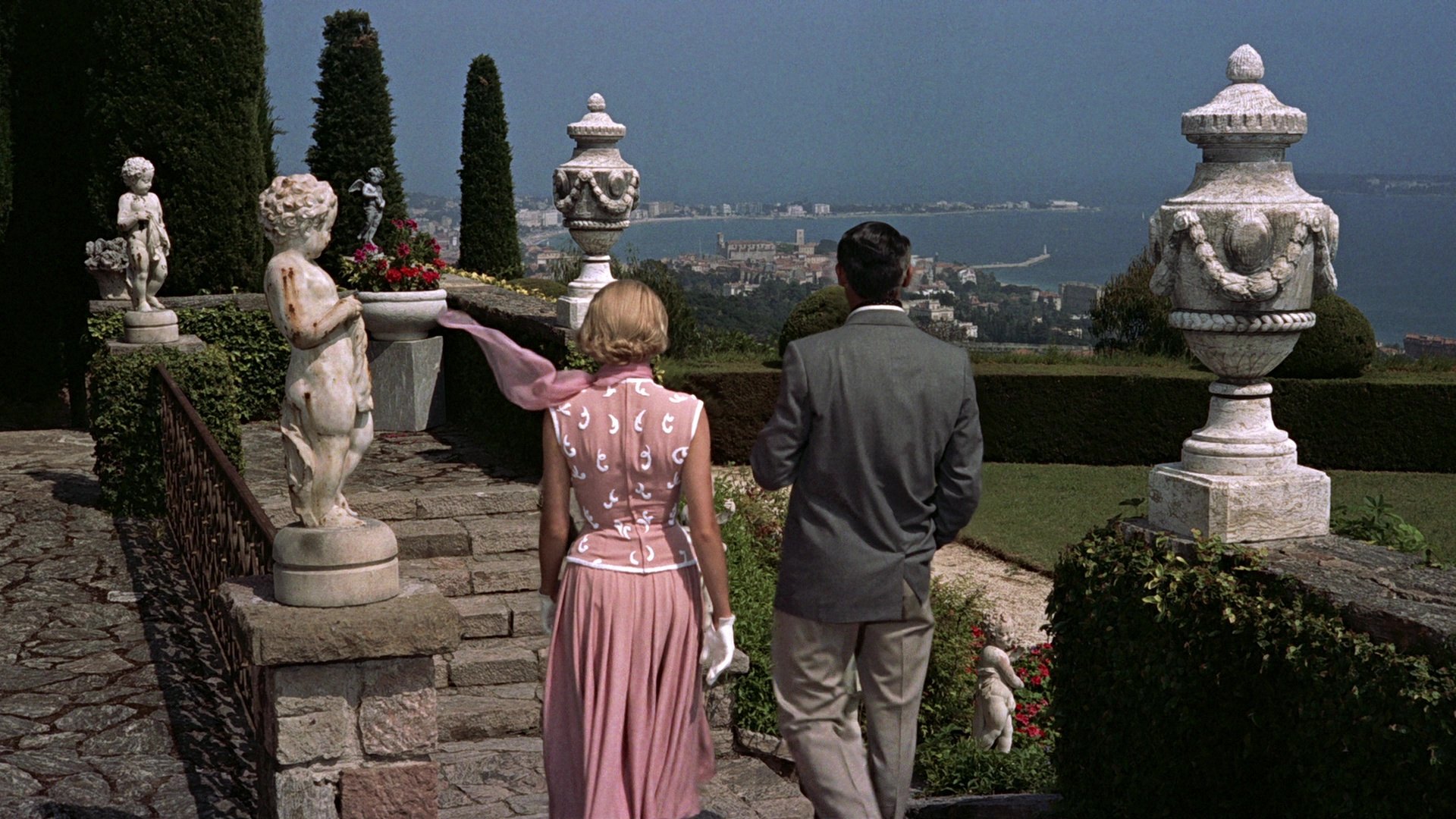
Some films leave you with a plot. Others leave you with a longing. For a coastline, a hotel lobby, a particular quality of light at five in the afternoon. There are films you watch and films that stay in the body like a scent: the way the camera holds a terrace in Ischia, a rain-soaked bridge in Paris, the slow pull of a poolside afternoon in the south of France. These are eight of them. Eight films that planted the seed of a journey. And for each, a hotel (or three) that makes the dream not just possible, but tangible.
THE TALENTED MR RIPLEY (1999)
Matt Damon and Jude Law sunning themselves in Ischia. White linen, silver cigarette cases, a jazz club in a Roman basement. Anthony Minghella’s film is a love letter to post-war Italy at its most seductive, the kind of Italy that exists in the golden hour between aperitivo and dinner, where every gesture carries a second meaning and every terrace overlooks something impossibly blue. The coastal scenes were shot across Ischia, Positano and Procida, and the country has barely moved on from that fantasy.
For the full Dickie Greenleaf experience, there is Il Pellicano in Porto Ercole, the pink-hued cliffside legend that has been collecting beautiful people since 1965, its saltwater pool cut into the rock, its restaurant a golden lantern at nightfall. In Positano, Le Sirenuse holds the coastline’s most romantic terrace, the kind of place where dinner lasts three hours and nobody minds. On Ischia itself, Mezzatorre sits on its own forested headland, the sea a private mirror at its feet, the pine-scented silence broken only by the occasional church bell from Forio below.
LOST IN TRANSLATION (2003)
Sofia Coppola’s neon-lit meditation on jet lag and connection unfolds almost entirely inside the Park Hyatt Tokyo , and twenty years on, the hotel is still the exact dream she captured. The New York Bar on the 52nd floor, where Shinjuku glitters below like a circuit board someone left on. The pool pressed against the sky at dawn, the city muffled to a hum. Coppola understood that Tokyo’s magic is not in its temples but in its transitions: the silence between neon and concrete, the hush of an elevator at 3am, the way a hotel corridor can feel like the loneliest and most beautiful place on earth.
The Park Hyatt still delivers that feeling with uncanny precision. For a quieter, more mineral counterpart, Aman Tokyo turns the 33rd floor of the Otemachi Tower into a vertical ryokan. All camphor wood, washi paper screens and volcanic stone, the city visible but held at a respectful distance, like a painting you’re not quite ready to step into.
ROMAN HOLIDAY (1953)
Audrey Hepburn on a Vespa, gelato on the Spanish Steps, a haircut in a tiny Roman salon. William Wyler’s film invented the concept of the European escape, the idea that a city could transform you, that freedom could taste like lemon granita at midnight, that the right afternoon in Rome could rewrite the rest of your life. The city still plays along. The ochre light still falls the same way across the piazzas, the Tiber still catches the sunset, and the backstreets of Trastevere still reward the kind of aimless wandering that Hepburn made look like an act of rebellion.
Stay at the Hotel de Russie , tucked between Piazza del Popolo and the Villa Borghese, where the secret garden courtyard, terraced with orange trees and climbing roses, remains one of the city’s great rendezvous. Or Hotel Locarno , the Art Deco stalwart where journalists and film directors have been conducting affairs since 1925, its bar dark enough to keep them. For the view, there is only the Hassler , perched at the top of the Spanish Steps themselves, where breakfast on the rooftop feels like a private screening of the city below.
TO CATCH A THIEF (1955)
Grace Kelly in a strapless gown driving Cary Grant along the corniche. Hitchcock’s Riviera is all citrus gardens, palace hotels and the sense that something deliciously illicit is about to happen before dinner. The film’s Technicolor palette, azure sea, terracotta roof, white linen, became the visual grammar of Riviera luxury, and the coast has never quite stopped performing the role.
Kelly herself stayed at the Hôtel du Cap-Eden-Roc in Antibes during shooting, and the white fortress on the pines remains the spiritual centre of this particular fantasy: the cliff-edge pool, the canvas-canopied restaurant, the scent of lavender and money drifting through the maritime pines. Nearby, Grand-Hôtel du Cap-Ferrat offers the saltwater infinity pool carved from the cliff, the Michelin-starred terrace where lunch stretches until the light turns pink. And for those who prefer their Riviera intimate rather than grand, La Réserve de Beaulieu is a Belle Époque villa where time still moves at the pace of a long afternoon: white shutters, blue water, the gentle clink of ice in a glass of rosé that nobody’s in any hurry to finish.
THE GRAND BUDAPEST HOTEL (2014)
Wes Anderson’s pink confection has become shorthand for a certain kind of precision-composed stay: symmetrical façades, uniformed bellhops, fondant-coloured walls, the feeling that someone has art-directed every corridor and that checking in is really a form of stepping into a painting. The fantasy, impossibly, does exist.
Closest in spirit if not geography is Maison Mystique in Khao Yai, Thailand, where founder Fearn Kate has built twenty-two suites connected by lantern-lit passageways, each one its own theatrical world. The garden unfolds in chapters, Mahogany Lane, Le Jardin Bijoux, woodland paths, and Bar Mystère is the kind of place where an evening disappears inside a cocktail. In Karlovy Vary, the Grandhotel Pupp was Anderson’s direct visual reference, a 1701 spa-town palace that still looks exactly as he drew it. For the alpine version, Gasthof Post in Lech is all carved wood, heraldry and clocktower charm. And in France’s Loire, Château du Grand-Lucé delivers the pastel-and-topiary fantasy in full, an eighteenth-century estate where the hedgerows are geometric, the salons are silk-panelled, and the whole place hums with the quiet conviction that beauty is a form of discipline.
DU CÔTÉ DE LA CÔTE (1958)
Agnès Varda’s sunlit short — her first colour film — moves along the Côte d’Azur like a perfume trail, equal parts travelogue, fable, and mischievous love letter. Filmed in a single summer, it captures the Riviera at the exact moment the world was falling in love with it: striped cabanas on the Croisette, children skipping through Monte-Carlo fountains, grand-hotel terraces catching the late light, the blue of the sea so saturated it looks almost imagined. Varda frames it all with a wink — the Riviera as myth and as living, breathing beach town at once. Sixty-five years on, the myth is still intact.
For the Art Deco heart of the film’s terrain, Hôtel Belles Rives in Juan-les-Pins — F. Scott Fitzgerald’s former villa above the bay — holds every ounce of the jazz-age elegance Varda kept returning her camera to, its cliffside pool and pier-side bar still the most romantic sundowner on the coast. Further inland, La Colombe d'Or in Saint-Paul-de-Vence is the Côte’s soulful centre, a stone auberge where Picasso, Matisse and Chagall once paid for dinner in paintings that still hang in the dining room. And for the film’s more glamorous postcards — the tiled beach clubs, the awnings, the sense of Riviera as staged scene — Monte-Carlo Beach Hotel across the Monégasque border delivers it all, blue mosaics and chaises lined up like punctuation along the Med.
LA PISCINE (1969)
Alain Delon, Romy Schneider, a villa, a pool, and the sun-soaked, slow-burning tension of a long Provençal afternoon. Jacques Deray’s film has become the aesthetic blueprint for an entire way of holidaying: the high-waisted bikini, the unbuttoned linen shirt, the sunglasses worn as armour, the pool as stage. It’s a film about desire and possession, but also about the particular narcotic quality of a French summer. The heat that slows thought, the cicadas that fill the silences, the way an afternoon by the water can feel both endless and achingly brief.
La Villa Marie in Ramatuelle channels exactly this mood, a pink-walled hideaway in the pine forest above Pampelonne beach, the pool the undisputed centre of gravity, the restaurant serving the kind of Provençal cooking that makes you forget you ever lived anywhere else. Closer to town, Hôtel Byblos remains the great myth of the Tropézien summer, its courtyard dripping with bougainvillea, its colour palette practically unchanged since Mick and Bianca Jagger checked in for their wedding in 1971 and the whole town rearranged itself around their energy.
MIDNIGHT IN PARIS (2011)
Owen Wilson wandering the Left Bank in the rain, a 1920s Peugeot that may or may not be a portal, and the persistent, beautiful delusion that the past was always more glamorous than the present. Woody Allen’s film paints Paris as it paints itself: golden, literary, softly impossible. A city where stepping into a cab at midnight might deliver you to the Moulin Rouge with Toulouse-Lautrec, or to a salon where Hemingway is holding court and Gertrude Stein is unimpressed.
The Ritz Paris is the obvious answer. Hemingway’s bar, the Coco Chanel suite, the gardens where Proust took tea, the sense that every corridor holds a century of impeccable scandal. But Le Bristol on rue du Faubourg Saint-Honoré delivers a quieter version of the same poetry, the rooftop pool with its mahogany yacht-deck suspended above the rooftops, the white Birman cat wandering the lobby like a small, self-possessed ambassador. For something smaller and stranger, Hôtel Particulier Montmartre , a five-suite nineteenth-century mansion hidden down a cobbled passage near the Moulin de la Galette, where the garden is wild, the rooms are art-filled, and the whole place feels like the kind of secret Paris rewards you with only after you’ve stopped looking for it.
Because the best travel, in the end, is the kind you’ve already half-imagined. A film seen on a rainy Tuesday that left you reaching for your phone to look up flights. A lobby glimpsed in a single tracking shot that made you want to check in and never leave. These eight films did that to us. We hope they do it to you.
Frequently Asked Questions
Where was The Talented Mr Ripley filmed?
The Talented Mr Ripley was filmed across Ischia, Positano and Procida in 1998–1999, with additional scenes in Rome, Venice and Naples. The most memorable sequences — the jazz club, the sun-drenched terraces, the coastal villages — were shot on and around Ischia's harbour and Procida's pastel-coloured Marina Corricella.
Where did they film Lost in Translation?
Lost in Translation (2003) was filmed almost entirely in Tokyo, with most hotel scenes shot at the Park Hyatt Tokyo — where the New York Bar on the 52nd floor and the pool remain largely unchanged from the film. Exterior scenes cover Shinjuku, Shibuya, and a day trip to Kyoto.
Can you stay in the Grand Budapest Hotel?
The fictional Grand Budapest was a scale model. The nearest real equivalents are Grandhotel Pupp in Karlovy Vary, Palace Bristol in Karlovy Vary, and Hotel Gasthof Post in Lech, Austria — all Belle Époque properties with the pink-cake architecture Wes Anderson was channelling.
Where was La Piscine filmed?
La Piscine (1969) was filmed on the Côte d'Azur, primarily at a villa in Ramatuelle near Saint-Tropez. Today's closest stays to recreate that Riviera atmosphere include La Villa Marie in Ramatuelle and Hôtel Byblos in Saint-Tropez.